Saikospeed
The industry data problem
Aftermarket inventory data is messy in a way that feels structural, not accidental. Stock counts are often wrong or stale, catalogs change without warning, and every supplier publishes availability in a different format with different assumptions. There’s no universal “sync inventory to your store” API, so retailers either accept the chaos or invest the engineering effort to normalize it.
Most retailers don’t bother because the payoff is invisible when it works. But when it fails, it’s loud: oversells, cancellations, refunds, and support tickets. Inventory accuracy is not a back-office detail. It’s the foundation of customer trust.
Some vendors make it harder than it needs to be. One partner “tracked” inventory with traffic-light colors. Green meant “plenty.” Yellow meant “low, call to confirm.” Red meant “out.” No counts, no timestamps, and manually updated once per day. If only there was a thing called a digital ledger that tracks inventory in and inventory out, so you wouldn’t need a person tediously counting boxes every day like it’s 1998 🤔 Running inventory like a traffic light doesn’t scale, and they refused to improve it, so we stopped working with them.
The solution
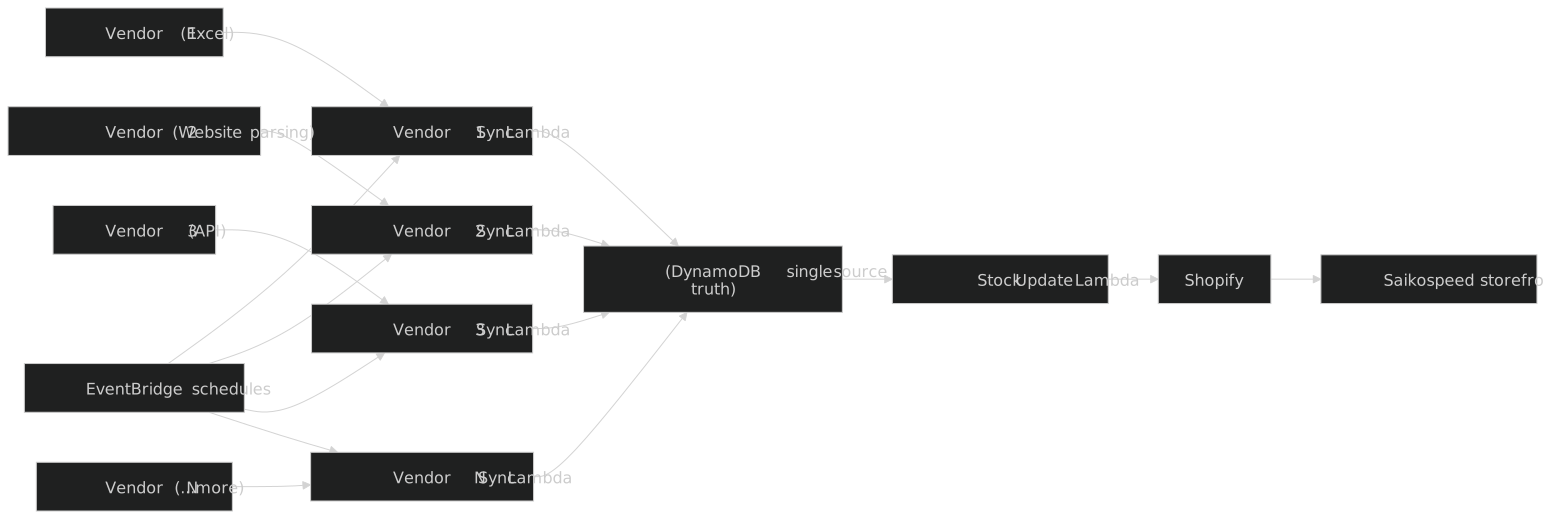
To prevent oversells and keep the storefront trustworthy, I built an ingestion pipeline that pulls stock from multiple vendor sources, normalizes it, and updates a single source of truth database that Shopify can reliably sync from.
Vendors feed DynamoDB through separate custom Lambda sync streams, depending on what’s available:
- Excel sheet parsing
- URL-based website stock parsing
- API calls (when provided, and VERY rare in this industry)
A stock-update Lambda periodically reads DynamoDB, computes deltas, and pushes only the necessary updates into Shopify.
Architecture
Components
- Shopify theme/UI (speed, clarity, consistency)
- Custom Liquid sections (proprietary UI components)
- AWS integration layer: Lambda + DynamoDB + EventBridge
- Automation jobs: inventory refresh, reporting exports, operational reminders
- Analytics instrumentation (events you can actually trust)
- Custom account page for Apex+ Members with a store credit redemption widget (API Gateway + Lambda + DynamoDB)
Highlights
- Reduced manual ops work by automating recurring tasks (sync, reporting, alerts)
- Improved inventory reliability by normalizing vendor feeds into a single source of truth